
PAT Testing for Supported Housing Providers.
From resident accommodation and communal areas to staff offices and shared facilities, portable electrical appliances are used throughout supported housing properties. Our PAT testing service provides a practical way to identify damaged or faulty equipment, maintain clear records and support your wider property compliance responsibilities.
We work with supported housing providers across individual properties and larger portfolios, providing a consistent and professional approach to portable appliance testing.
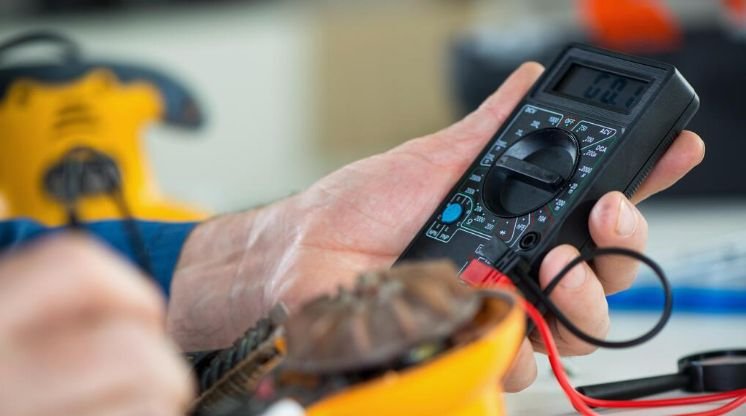
Portable Appliance Testing (PAT) is the inspection and, where appropriate, electrical testing of portable and transportable electrical equipment to help determine whether it remains safe to use.
PAT testing involves more than simply connecting an appliance to a testing machine. A competent inspection should include a visual examination of the equipment, looking for signs of damage, deterioration or other conditions that could create danger. Electrical testing can then be carried out where appropriate to identify faults that may not be visible.
Portable electrical equipment commonly found in supported housing can include:
• Kettles
• Microwaves
• Toasters
• Fridges and freezers
• Washing machines
• Vacuum cleaners
• Portable heaters
• Lamps
• Extension leads
• Office equipment
• Portable tools
• Communal-area electrical equipment
The equipment requiring inspection and testing will depend on the property, how equipment is used and the risks associated with it.
Damaged or poorly maintained electrical equipment can present serious safety risks, including electric shock, burns and electrical fires.
This can be particularly important within supported housing, where electrical appliances may be used regularly by residents, support workers, staff and contractors. Equipment may also be moved between rooms, shared between users or subjected to significant levels of use.
PAT testing can help identify electrical equipment that is damaged or unsafe and ensure that appropriate action can be taken.
For supported housing providers managing multiple properties, PAT testing can also provide a consistent way of monitoring portable electrical equipment across a wider portfolio.
It is important to understand that PAT testing is not simply an annual requirement. The Health and Safety Executive (HSE) does not require every electrical appliance to undergo PAT testing every year. Instead, inspection and testing should be determined by the level of risk, taking into account factors such as the type of equipment, how it is used, how often it is moved and the environment in which it operates.
PAT testing is supported by the following legislation and guidance:
• Electricity at Work Regulations 1989
• Health and Safety at Work etc. Act 1974
• HSE Guidance
There is no legal requirement for every appliance to be PAT tested annually. However, we recommend annual PAT testing for supported housing properties as part of a proactive approach to electrical safety and compliance.

We are the UK’s only dedicated compliance service focused entirely on supported housing providers. We provide practical, dependable compliance support built around the needs of supported housing providers.
We specialise in supported housing compliance, providing end-to-end compliance services for supported housing providers, landlords and housing organisations across the UK. From one property to a nationwide portfolio, you’ll have one trusted compliance partner.
Our assessors are DBS checked and trained to Safeguarding Level 3, giving supported housing providers confidence that every site visit is carried out professionally, responsibly and with an understanding of vulnerable resident environments.
Based in Manchester, we provide supported housing compliance services across the UK, with a particular focus on Greater Manchester and the wider North West. Wherever your properties are located, we’re ready to help.
Our compliance reports are written in plain English, with clear findings, practical recommendations and documentation that’s ready to use. No unnecessary jargon, just reports that help you act quickly and stay compliant.
We help supported housing providers stay ahead of renewals, inspections and compliance deadlines with proactive reminders, dependable communication and a responsive team that keeps everything on track.
We coordinate your compliance services in one place, reducing administration, saving time and making property compliance easier to manage, so you can focus on supporting your residents.
This is the second time we have used this company, and once again they have exceeded our expectations. Working in the care sector means we rely heavily on providers who not only understand compliance but also deliver services to a consistently high standard. This company offers every compliant service we need, which genuinely makes our day-to-day operations run more smoothly and gives us complete peace of mind.
Their customer service is outstanding. Every interaction—whether by phone or email—has been prompt, professional, and incredibly helpful. It’s clear that they value their clients and take pride in delivering reliable, efficient support.
We would highly recommend this company to anyone in the care sector looking for dependable, compliant services backed by excellent customer care. They have become a trusted part of our process, and we will certainly continue using them in the future.
As an added bonus, they also offer a referral programme, which is a great extra benefit for loyal customers.

“We use The Compliance Company for all of our Supported Housing properties, and have been delighted with the service they provide.
They deal with all of our annual certificates to ensure we are always compliant, we are provided with a folder of all of our up to date certificates and have signed up to their monthly direct direct package so we can manage our cashflow better.
Great service for supported housing or care providers looking for a single point of accountability on their properties”
“Great service! We needed an asbestos and legionella report for our property, and the team handled everything quickly and professionally. We also needed extra jobs like PAT testing, an emergency lighting test, and a smoke alarm test — they were really helpful and booked us in for the following week. Fast, reliable and thorough. Highly recommended”
“Great service and report issued very quickly. As a landlord we would highly recommend to other landlords.“
We provide PAT Testing across the UK for supported housing providers, care providers, managing agents, nominated individuals, and responsible persons, delivering compliance services that help keep residents safe and organisations compliant.
Our surveyors regularly work across:
• Greater Manchester
(Manchester, Salford, Bolton, Stockport, Oldham, Rochdale, Bury, Tameside, Trafford, Wigan)
• Merseyside
(Liverpool, Wirral, St Helens, Southport, Knowsley, Sefton)
• Cheshire
(Chester, Warrington, Crewe, Macclesfield, Northwich, Ellesmere Port, Wilmslow)
• Lancashire
(Preston, Blackburn, Blackpool, Burnley, Accrington, Rossendale, Chorley, Lancaster)
• West Yorkshire
(Leeds, Bradford, Wakefield, Huddersfield, Halifax, Dewsbury, Batley)
• South Yorkshire
(Sheffield, Doncaster, Rotherham, Barnsley)
• North Yorkshire
(York, Harrogate, Scarborough, Ripon, Selby, Skipton)
• East Midlands
(Derby, Nottingham, Leicester, Derbyshire, Nottinghamshire, Leicestershire)
• Staffordshire
(Stoke-on-Trent, Stafford, Tamworth, Newcastle-under-Lyme, Burton upon Trent)
• West Midlands
(Birmingham, Coventry, Wolverhampton, Solihull, Walsall, Dudley, Sandwell)
• North East
(Newcastle, Sunderland, Gateshead, Middlesbrough, Darlington, Durham)
• East Anglia
(Cambridge, Norwich, Ipswich, Peterborough)
• Greater London
(Central, North, South, East, West London)
• Kent
(Maidstone, Canterbury, Medway, Ashford, Dartford, Tunbridge Wells)
• Surrey
(Guildford, Woking, Reigate, Epsom, Redhill)
• Essex
(Chelmsford, Colchester, Basildon, Southend-on-Sea, Harlow)
• South Coast
(Hampshire, Sussex, Portsmouth, Southampton, Brighton, Eastbourne)
• South West
(Bristol, Devon, Cornwall, Somerset, Gloucestershire, Plymouth, Exeter, Bath, Gloucester, Cheltenham, Taunton)
• South Wales
(Cardiff, Newport, Swansea, Bridgend, Merthyr Tydfil)
• Scotland
(Glasgow, Edinburgh, Aberdeen, Dundee, Stirling, Perth)
PAT testing itself is not a specific legal requirement. However, electrical equipment must be appropriately maintained where necessary to prevent danger under the Electricity at Work Regulations 1989.
The appropriate inspection and testing regime should be based on the risks associated with the equipment and how it is used.
No. There is no legal requirement for all portable electrical equipment to be PAT tested every year. The frequency should be based on the type of equipment, how it is used and the level of risk.
However, we recommend annual PAT testing for supported housing properties as a proactive approach to maintaining electrical safety, identifying potential faults and keeping clear compliance records.
Portable and transportable electrical equipment used within supported housing should be considered as part of your electrical safety and maintenance arrangements.
This can include kettles, microwaves, fridges, freezers, washing machines, vacuum cleaners, portable heaters, lamps, extension leads, office equipment and other portable electrical appliances.
The equipment requiring formal inspection or electrical testing should be determined by factors such as the type of equipment, how frequently it is used or moved, its condition and the environment in which it is used.
We recommend annual PAT testing for supported housing properties as a proactive approach to electrical safety, alongside regular visual checks and appropriate maintenance.
If an appliance fails an inspection or electrical test, it should be assessed and appropriate action taken. Depending on the fault, this may involve removing the appliance from use, arranging a suitable repair or replacing it.
There is no legal requirement to keep records of PAT testing. However, keeping accurate records is a useful way to demonstrate that portable electrical equipment is being appropriately inspected, tested and maintained.
For supported housing providers, PAT testing records can also help you manage electrical equipment across multiple properties, identify appliances requiring further action and maintain a clear audit trail.
To make this easier, we have created a downloadable PAT Testing Record Checklist that you can use to record your inspections and testing.
Yes. We can provide PAT testing across individual supported housing properties or larger portfolios, helping providers maintain a consistent approach to portable electrical equipment.
For many social housing properties, you need both. An EICR checks the fixed electrical installation, while PAT testing checks electrical equipment provided by the landlord. They cover different parts of the property’s electrical safety and one does not replace the other.
An EICR (Electrical Installation Condition Report) assesses the fixed electrical installation, including wiring, socket-outlets, light fittings and the consumer unit. Under the current regulations, covered landlords must have the electrical installation inspected and tested by a qualified person at least every five years.
PAT testing, more formally referred to in the regulations as in-service inspection and testing of electrical equipment, applies to electrical equipment provided by a social landlord as part of the tenancy. Covered social landlords must ensure this equipment is checked at least every five years, with the extent of visual inspection and testing determined by the qualified person.
In short: an EICR checks the fixed electrical installation, while PAT testing checks landlord-provided electrical equipment. For covered social housing, you should consider both rather than choosing one instead of the other.
PAT testing is only one part of your wider property safety responsibilities. A Fire Risk Assessment looks at the overall risk of fire within a property, including the building, how it is used, fire precautions and the people who may be at risk. PAT testing specifically looks at portable and transportable electrical equipment.
For supported housing providers, it’s important to consider both areas as part of a wider approach to keeping residents, staff and visitors safe.
We regularly help supported housing providers manage their fire and electrical safety requirements.
Find out more about our Fire Risk Assessments
PAT testing does not cover your fire alarm system. Fire alarm servicing is concerned with inspecting, testing and maintaining the fire detection and alarm system, whereas PAT testing focuses on portable electrical appliances.
Where a fire alarm system is required for your property, it needs to be appropriately maintained and kept in effective working order. The exact requirements will depend on the building and its fire safety arrangements.
We can help supported housing providers manage both services as part of their wider property compliance requirements.
Find out more about our Fire Alarm Servicing
Yes, if emergency lighting is required for your property, it needs to be maintained separately from your PAT testing. PAT testing covers portable and transportable electrical equipment, while emergency light servicing checks the emergency lighting system used to provide illumination when normal lighting fails.
Whether emergency lighting is required, and the arrangements needed, depend on the property and its fire safety risk assessment. Where it is provided, it should be appropriately tested and maintained.
We regularly work with supported housing providers to manage both electrical and fire safety requirements across their properties.
Find out more about our Emergency Light Servicing.
PAT Testing starts from £80 + VAT.
Our pricing is based on the number of appliances being tested, with larger requirements quoted according to the scope of testing.
Prices may vary depending on your location, number of appliances, property size and testing requirements. Volume pricing may also be available.
*From £250
We help you identify what could put your residents at risk and give you a clear plan to make your property safer.
Our assessments are carried out in line with the Regulatory Reform (Fire Safety) Order 2005, the Fire Safety Act 2021, PAS 79-1:2020 (care homes and non-domestic premises) and BS 9792:2025 (supported housing, HMOs and residential dwellings).
With practical, straightforward reporting, you’ll know exactly what needs to be done, feel confident you’re covered and be ready for any inspection.
*From £250
We help you find out whether asbestos is present in your property and manage it properly.
Our surveys are conducted under the Control of Asbestos Regulations 2012 and follow HSG264 guidance, meaning your Management Survey or Refurbishment/Demolition Survey meets the legal standard required for supported housing and care properties.
With clear, practical reporting, your residents are protected, your contractors are safe and you have the documentation to prove you’ve done things right.
*From £129
We help you protect vulnerable residents from the serious health risks of Legionella and put a clear water safety plan in place.
Our assessments follow HSE L8 ACOP, HSG274 and BS 8580-1:2019, which are the core standards that define how Legionella risk must be identified and controlled in residential and care settings.
With a thorough assessment and tailored Scheme of Control, your water systems stay safe, monitored and compliant all year round.
*From £120
We provide professional Emergency Lighting Servicing for supported housing providers, helping you maintain emergency lighting systems across your properties.
Our servicing includes the inspection, testing and maintenance of emergency lighting systems, helping ensure escape routes and other areas have appropriate illumination when normal lighting fails.
*From £120
We provide professional Fire Alarm Servicing for supported housing providers, helping maintain fire detection and alarm systems across supported accommodation properties.
Our servicing includes the inspection, testing and maintenance of fire alarm systems, helping identify faults and maintain effective fire detection and warning for residents, staff and visitors.
Fire alarm systems provided as part of a property’s fire safety measures must be appropriately maintained. The Regulatory Reform (Fire Safety) Order 2005 places duties on the Responsible Person to maintain relevant fire safety measures in efficient working order and good repair.
*From £79
We provide professional Energy Performance Certificates (EPCs) for supported housing providers, helping you understand the energy efficiency of your properties.
Our EPC assessments provide an A–G energy efficiency rating and recommendations for potential improvements, giving you a clear picture of your property’s energy performance and helping you meet applicable energy-efficiency requirements.
*From £85
We provide professional Gas Safety services for supported housing providers, helping you maintain safe gas appliances, fittings and flues across your properties.
Our annual gas safety checks are carried out by Gas Safe registered engineers in accordance with the Gas Safety (Installation and Use) Regulations 1998, helping identify safety issues and maintain clear records of the checks completed.
*From £129
Identify damp, mould and moisture issues before they become bigger property problems. Our surveys help supported housing providers understand the condition of their properties and document findings clearly.
Our non-intrusive assessments use visual inspection, photographic evidence and moisture-meter readings to identify potential causes and recommend appropriate next steps.
We carry out assessments with reference to the Housing Act 2004 and HHSRS, supporting providers where applicable in responding to their responsibilities under Awaab’s Law.
Give us a call or drop us a message on WhatsApp. Tell us a bit about your property and requirements, and our team will be happy to get back to you with a fast quote.
How safe and compliant is your supported housing? Find out with our Supported Housing Safety Checker.